
 A space of your own
For patients
Your week. At your own pace.
Patients use the Anivow mobile app between appointments.
- Check in
- Track progress
- Record difficult moments
- Complete recovery activities
- Follow clinician programs
- Choose what to share
RECOVERY, ONE CONNECTION AT A TIME
A patient app. A workspace for care teams. One connection that brings the week into the next conversation. Built for addiction clinicians and treatment centers.

TWO SPACES. ONE CONNECTION.
Explore the patient app and the professional workspace. Connected by the information patients choose to share.
A space of your ownFor patients
Patients use the Anivow mobile app between appointments.
 Find the thread, together
For addiction clinicians
Addiction clinicians use Anivow Care to prepare sessions and follow recovery between appointments.
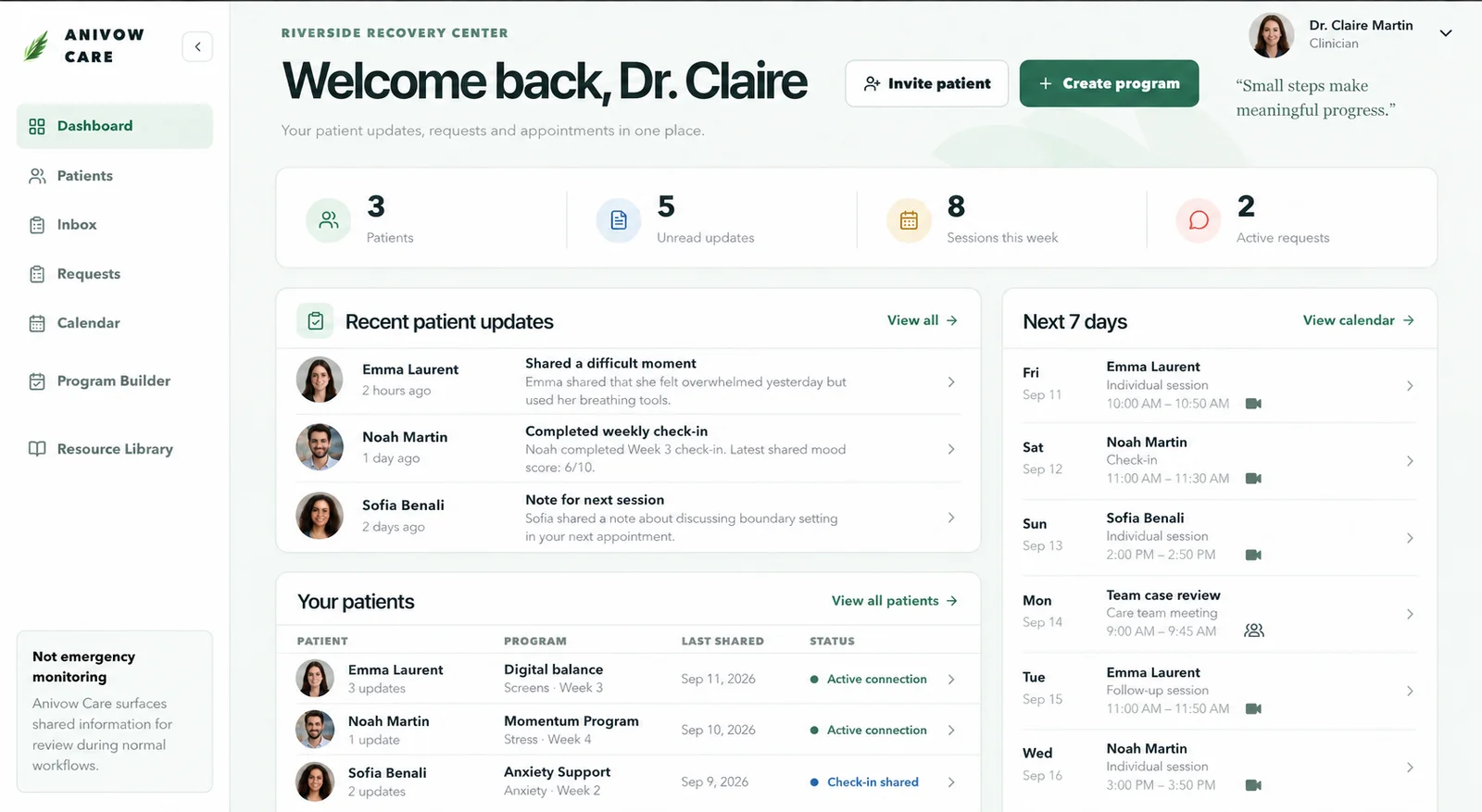
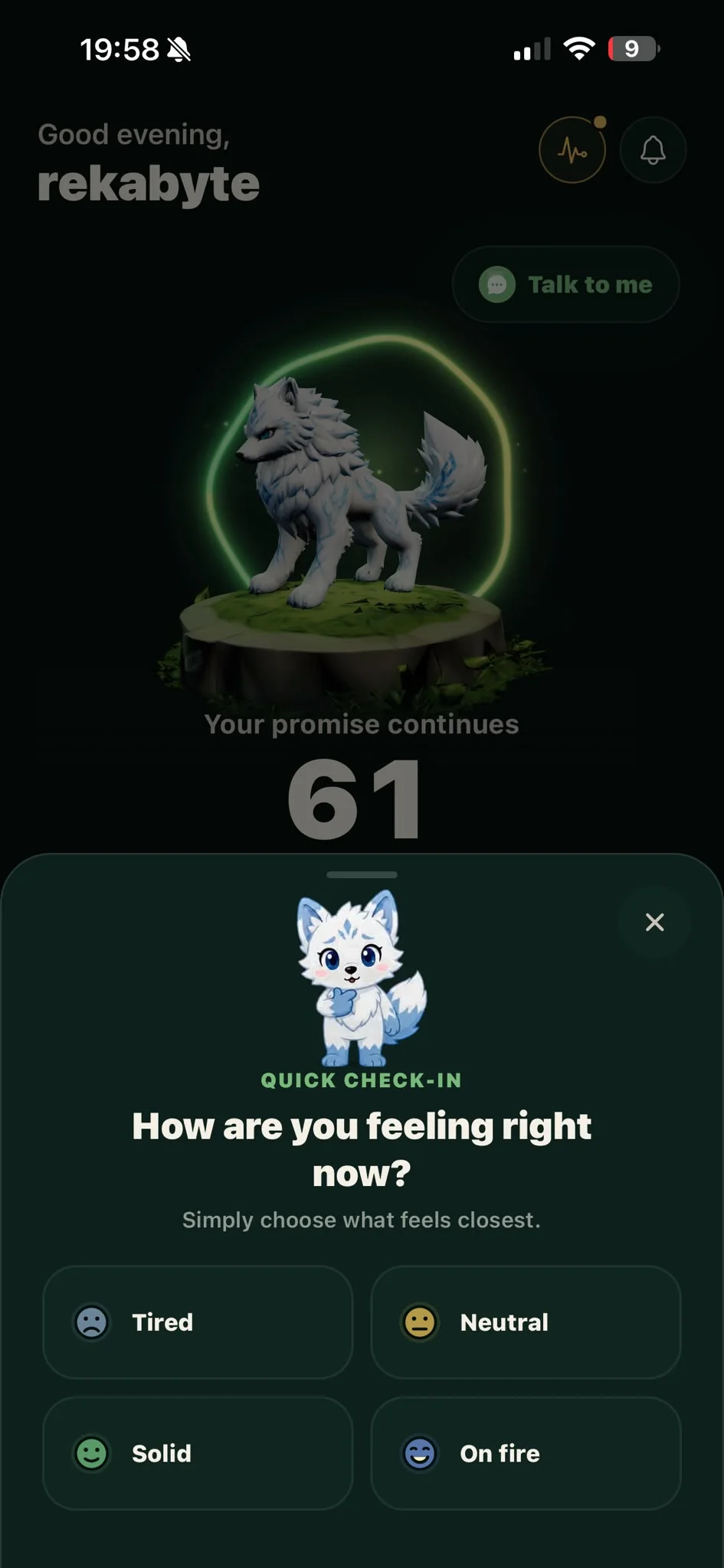 Product preview · illustrative data
FOR ADDICTION TREATMENT CENTERS
Anivow gives addiction treatment centers one place to organize work between sessions. Addiction clinicians can review the information patients choose to share before the next appointment.
BETWEEN SESSIONS
Many important things happen between addiction treatment appointments. Without that information, the clinician may need to rebuild the whole week from memory during the next session.
Anivow helps connect these moments.
A CONNECTION THAT GROWS
They assign recovery work or follow-up.
They complete check-ins, activities and record important moments.
Private information stays private.
They review the shared information before the appointment.
TRUST AT THE HEART OF THE CONNECTION
Anivow supports the care team. It does not replace clinical judgment or emergency care.
Privacy and securityARTIFICIAL INTELLIGENCE
Anivow is adding AI to help addiction clinicians with repetitive work. AI does not replace the clinician and does not make treatment decisions.
AI can format clinician-supplied generic activity paragraphs without adding content or changing their order. The clinician reviews and changes the draft before using it.
Anivow deterministically organizes patient-shared facts and factual period comparisons. It does not diagnose, score risk or recommend treatment.
THE NEXT STEP, TOGETHER
Explore the patient app and Anivow Care with our team. See how they could fit the way your center works.